European Perch Field Guide
How to identify European Perch, separate source-backed species facts from field interpretation and prepare responsibly without treating a general guide as local regulation advice.
Key facts
Species facts.
- Perca fluviatilis is the scientific name for European Perch Evidence A.
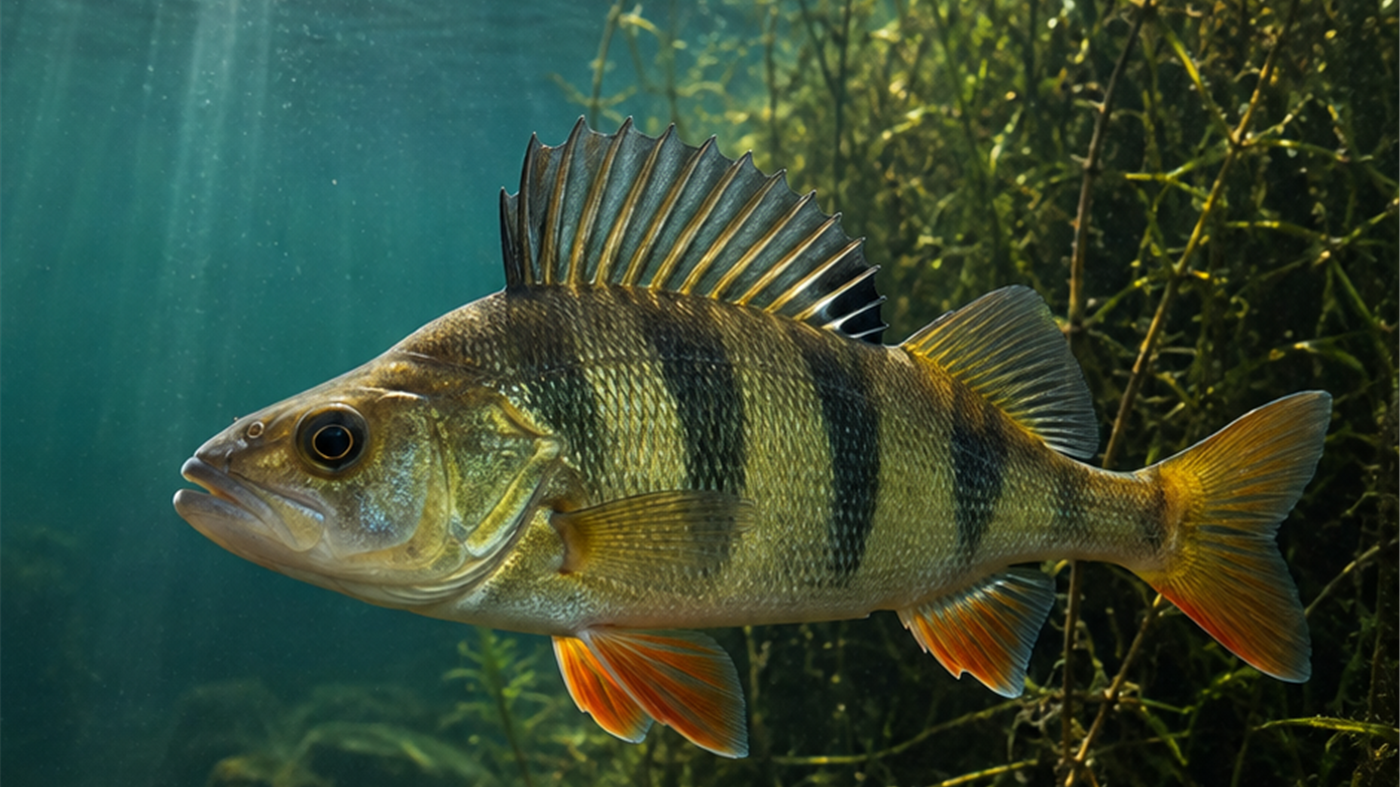
- Common identification cues include a deep, laterally compressed body, dark vertical flank bars, two dorsal fins with a spiny first dorsal fin and red-orange lower fins in many adults Evidence A.
- European Perch can use freshwater and low-salinity habitats including lakes, canals, slow rivers, medium streams and estuarine lagoons Evidence A.
- It is an opportunistic daytime predator; larger perch increasingly take small fish while smaller life stages use planktonic and benthic prey Evidence A.
These facts are based on the listed source references and the local knowledge contract, not on the visual pilot media.
Identification
Look for dark vertical bars, a deep laterally compressed body, two dorsal fins with a spiny first dorsal fin and red-orange pelvic, anal and caudal fins in many adults. Use several traits together because juveniles, lighting and local forms can vary Evidence A.
Habitat
Source-backed fact: European Perch can use lakes, canals, slow rivers, medium streams and low-salinity waters. Practical interpretation: read the water as connected signals: cover, prey size, oxygen, depth change, shade and current edges matter more than a single spot label.
| Signal | What to observe | Editorial interpretation |
|---|---|---|
| Cover | Plants, wood, edges, docks or depth breaks. | A weed edge can be tested when cover, prey signs, oxygen and clarity make it plausible; it is not a universal perch-location rule. |
| Water clarity | Visibility, turbidity and light level. | Presentation size and contrast should follow local conditions, not a universal rule. |
| Season | Temperature trend and prey movement. | Seasonal context changes likely depth and activity windows, but local regulation details require official review. |
Behavior and seasonal context
Source-backed fact: Perch are opportunistic daytime feeders. Smaller life stages use planktonic and benthic prey, while larger individuals increasingly use fish prey where available. Seasonal caveat: spawning timing varies by region and must be localized before publication Evidence B.
- Confirm current local rules before fishing.
- Observe prey activity before selecting a method.
- Reduce handling time and avoid fishing during obvious stress conditions.
Practical interpretation
Source-backed fact: European Perch uses a wide range of freshwater and low-salinity habitats. Practical interpretation: read structure, cover, flow, oxygen and prey signs before selecting a presentation.
A small fish-profile softbait on a jighead is a plausible method to test only when lure size, weight, local rules and observed conditions fit Evidence C. Water clarity, prey size, cover and rules matter more than a universal bait list.
Visual material
The still image and video are local pilot visuals for article layout, species-card design and review workflow. They are not documentary field evidence, are not scientific sources and must not replace source review or expert realism review.
Regional regulations
Seasonal timing is regional. FieldCurrent does not publish local closed seasons, minimum sizes, bag limits, access rights or protected-area rules without a dated official source for the exact water.
Responsible fishing
Use appropriate tackle, avoid unnecessary deep hooking, keep fish wet and reduce handling during unusually warm or oxygen-poor conditions. This is educational content, not legal advice.
Sources
The listed URLs are retained from the local knowledge contract and draft package for manual source review. The image and video are visual review assets only.
- FishBase: Perca fluviatilis species summary
- IUCN Red List assessment search for Perca fluviatilis
- U.S. Fish and Wildlife Service fishing program
- National Park Service freshwater fishing guidance
- FAO Fisheries and Aquaculture
Review status: manual source review required; publishing gate closed.